
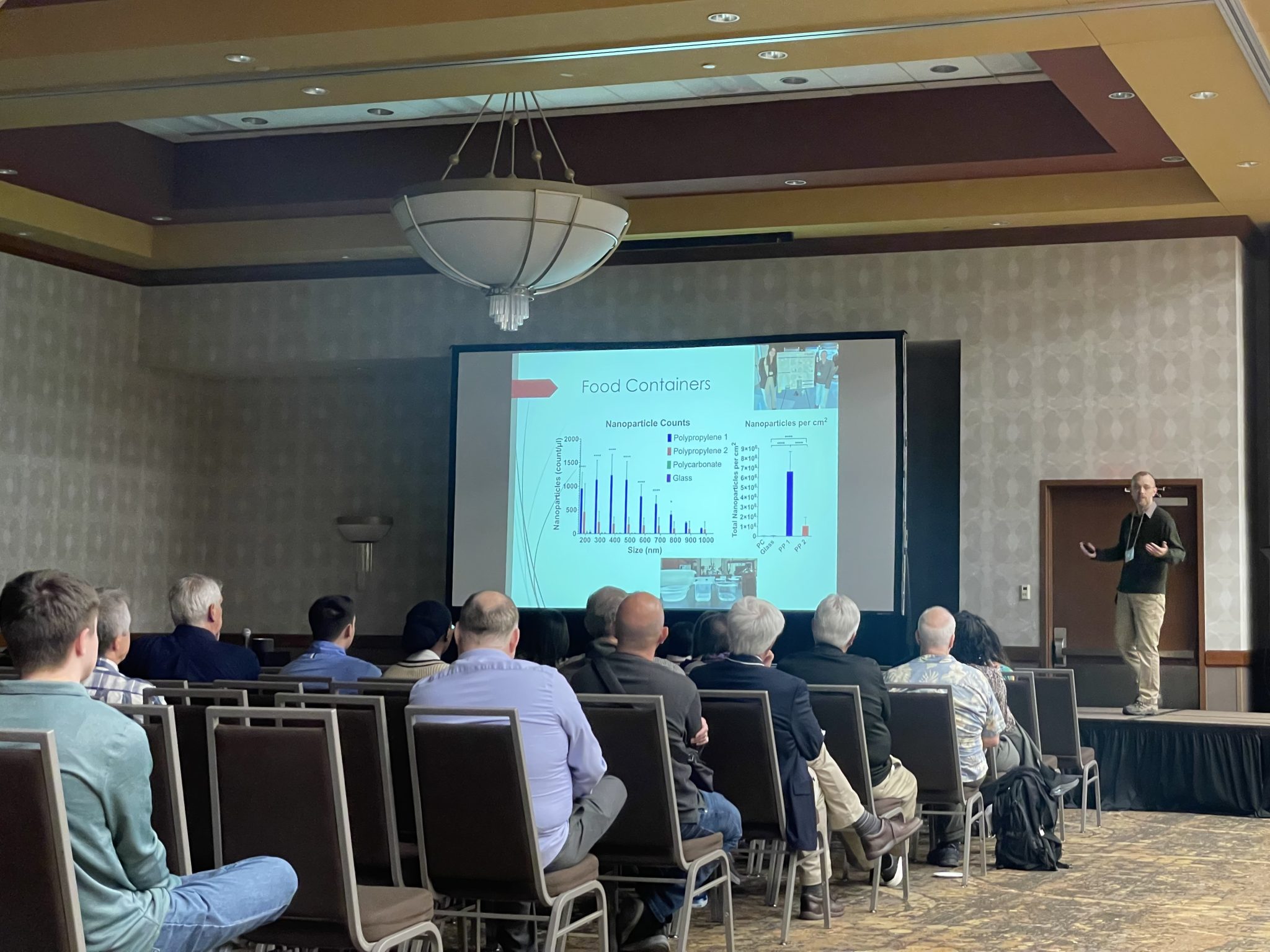
Dr. James Hyde delivering the plenary address at the conference
Students and faculty from Southern Arkansas University recently presented research at statewide and national conferences, highlighting the University’s commitment to undergraduate research and academic excellence.
During the fall semester, SAU students and faculty attended the Arkansas INBRE Conference in Fayetteville, Arkansas, where they shared research with biomedical scholars from across the state. Arkansas INBRE (IDeA Network of Biomedical Research Excellence) is a National Institutes of Health-funded network that supports biomedical research at predominantly undergraduate institutions throughout Arkansas.
Several SAU students presented original research at the conference. Abigail Young, advised by Dr. James Hyde, presented her work on the effects of nanoplastics on brain function. Sayed Amin, advised by Dr. Samia Amin, presented research examining the use of mobile health apps to track lung cancer treatment adherence. Malak Bachri, advised by Dr. Ahmad Al Shami, presented her study using computer analysis models to evaluate medical X-ray images.
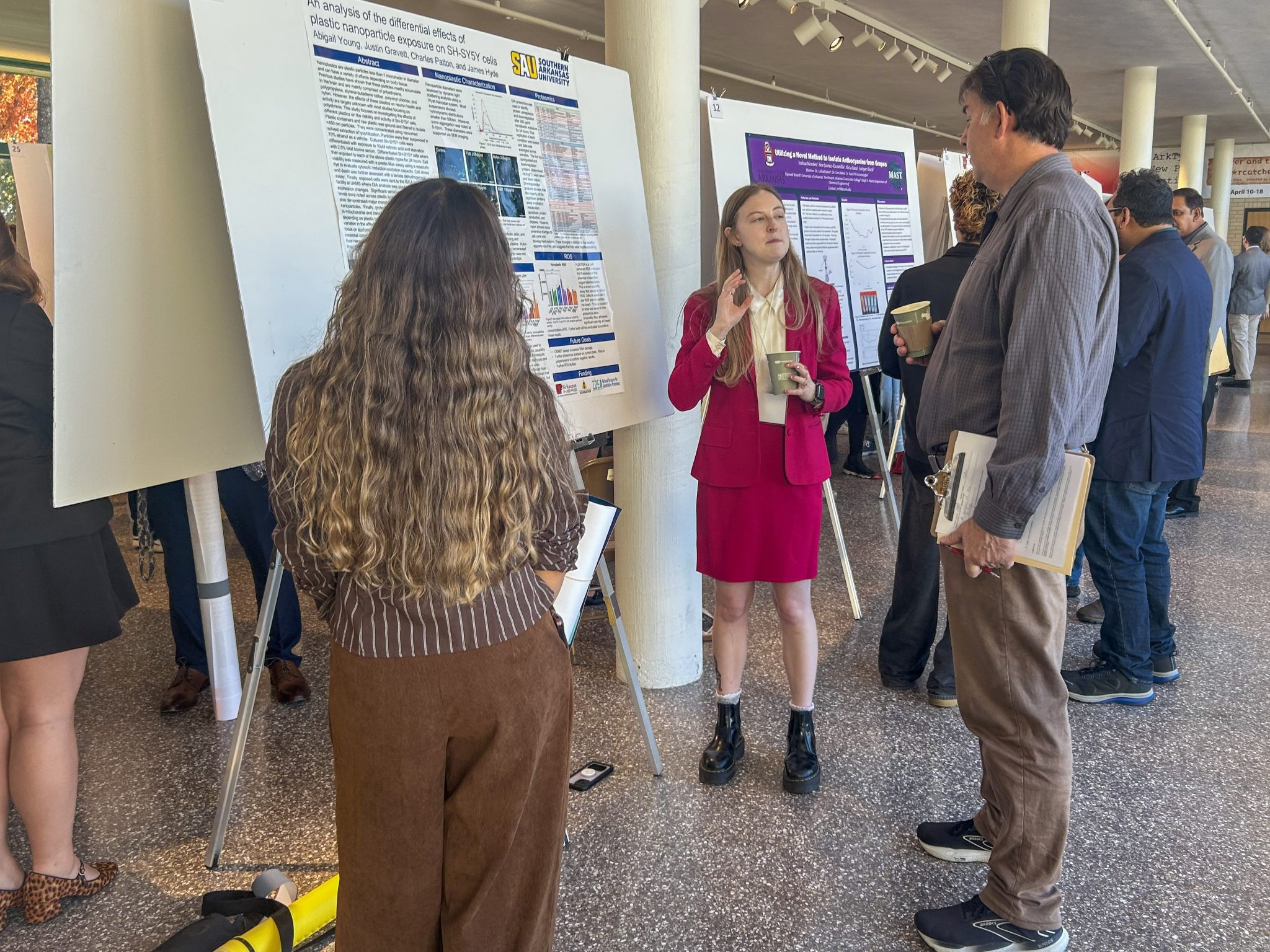
Abigail Young presenting research on nanoplastics
In addition to student presentations, SAU biology professor Dr. James Hyde was invited to deliver the conference’s biology plenary address. His presentation focused on research examining how nanoplastics derived from food containers affect brain cell activity.
During this same time, two SAU biology students traveled to San Diego, California, with the University’s Honors College to present at the annual National Collegiate Honors Council Conference. The conference is an interdisciplinary national event that showcases honor-level research conducted by undergraduate students across the country.
Justin Gravett, advised by Dr. James Hyde, presented research on the toxic effects of 3D printer resins on brain cell physiology. Jenna Holmes, advised by Dr. Adrian Showalter, presented her work exploring the use of zinc oxide nanoparticles as a potential treatment for triple-negative breast cancer.
These research opportunities provide SAU students with valuable hands-on experience and the chance to share their work on regional and national stages, reinforcing the University’s emphasis on experiential learning and academic achievement.
About SAU:
Southern Arkansas University provides students with the complete college experience in a caring environment of service, innovation, and community. With more than 100 degrees across four distinct colleges and the School of Graduate Studies, SAU initiates new degree programs to meet the needs of today’s career and professional trends. To learn more about SAU, visit www.saumag.edu.